
Financial Trading Explained: What is it and How It Works?
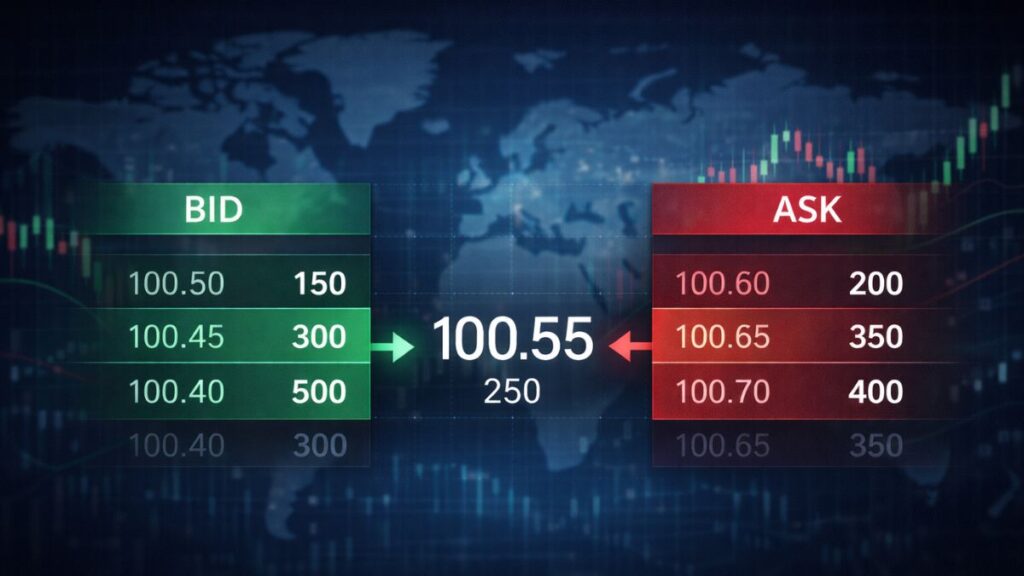
Definition: Trading is the act of buying and selling financial assets with the goal to take opportunity of price movements. Unlike long-term investing, trading involves actively monitoring prices and making frequent buy and sell decisions.
The assets traded in financial markets include stocks, commodities, currencies, bonds, metals, energies, derivatives, etc. Each of these assets responds to different economic factors and market conditions.
Example: You buy a stock at 100. If the price rises to 120 and you sell it, you earn a profit of 20. If the price falls to 90 and you sell it, you incur a loss of 10.
That price difference is the outcome of a trade.
The Origin of Trading
Trading did not begin with stock markets or modern financial systems. It began with a basic human exchange. Long before money existed, people traded goods and services directly to meet their needs. Farmers exchanged grain for tools, merchants traded goods across regions, and value was determined by demand, usefulness, and availability rather than price tags.
As societies and economies grew more complex, barter systems became inefficient. Money emerged as a common medium of exchange, making trade easier and more consistent. Over time, organized markets were created to connect buyers and sellers, and businesses required money to expand their operations.
Financial trading is the modern, digital form of exchange, where people trade ownership of assets rather than physical goods.
Why Do People Trade?
People participate in trading for different purposes, depending on how they use the financial markets.
Income generation: Some people trade to earn income. These traders look for short-term price movements and aim to buy and sell assets at favorable prices to generate returns over time.
Speculation: Others trade to take advantage of price changes. Market prices move constantly due to news, supply and demand, and economic events.
Hedging: Trading is also used to manage risk. Businesses and investors often trade to protect themselves from unfavorable price changes, a process known as hedging.
Finally, trading allows individuals to participate actively in financial markets. Instead of simply watching prices move, traders can engage directly with market activity and make informed decisions.
How Trading Works Today
Modern trading happens through online platforms connected to exchanges.
Every trade involves:
- A buyer
- A seller
- An agreed price
The Trading Process
- A trader places a buy or sell order
- The exchange matches it with another participant
- The trade is executed
- Prices update in real time
This entire process takes seconds but is supported by regulated systems designed to ensure transparency and fairness.
Important Things to Know About Trading
Before anyone starts trading, certain realities must be understood.
- Trading involves risk: Losses are a natural part of trading.
- Trading is not gambling: Successful trading relies on analysis, planning, and discipline.
- There is no single way to trade: Different styles suit different goals and personalities.
- Knowledge comes before action: Understanding markets is more important than placing trades.
Trading vs Investing
Although related, trading and investing serve different purposes.
- Trading focuses on short- to medium-term price movements
- Investing focuses on long-term value and growth
Both are valid approaches, depending on objectives and risk tolerance.
Final Thoughts
Trading is not about shortcuts.
It is a structured activity built on exchange, price movement, and informed decision-making.
Understanding what trading is, why it exists, and how it works is the first step toward responsible market participation.
At Centrino Capital, education comes before execution.
FAQs
1. Is trading the same as investing?
No. Trading focuses on short- to medium-term price movements, while investing focuses on long-term value and growth. Both approaches serve different financial goals.
2. Is trading risky?
Yes. Trading involves risk, and losses are a natural part of trading. Understanding risk management is essential before participating in financial markets.
3. Is trading the same as gambling?
No. Trading is based on analysis, planning, and discipline. While outcomes are uncertain, trading is not random when approached responsibly.
4. How do traders make money?
Traders aim to buy assets at one price and sell them at another. The outcome arrives from the difference between the buying and selling prices, after accounting for costs.
5. Can anyone trade?
Most trading platforms require individuals to be at least 18 years old to trade. While anyone can learn about trading at any age, active participation requires legal eligibility, discipline, and risk awareness.
Disclaimer:
This article is for informational purposes only and should not be considered as an investment advice. The views and data presented are based on publicly available information which we believe is to be authentic. Investing in financial markets involves risk, including the possible loss of capital. Readers should do their own research or consult a qualified financial advisor before making any investment decisions. The author and publisher are not responsible for any losses arising from the use of this information. *T&C’s apply.